
Dry Needling in Cape Town: How It Relieves Muscle Pain and Tension
If you have ever had a muscle knot that just would not release, dry needling might have come up in conversation. It is a technique physiotherapists use to ease tight, painful muscle and help you move more comfortably. Despite the name, it has nothing to do with injections. Here is what dry needling actually is, how it works, and what to expect from a session in Cape Town.
What is dry needling?
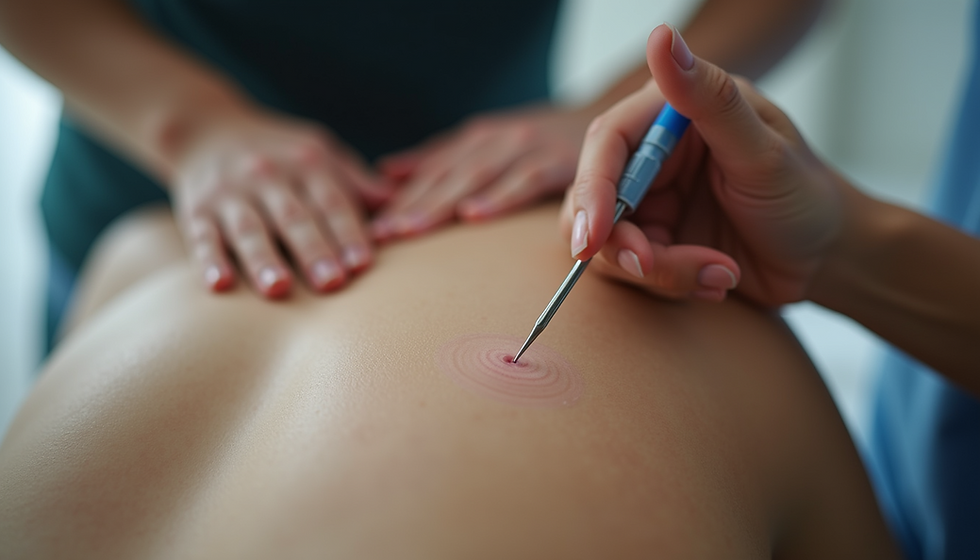
Dry needling uses very fine, sterile filament needles inserted into tight bands of muscle known as trigger points. It is called dry because nothing is injected. The aim is to prompt the muscle to release, ease local tension and reduce the referred pain that trigger points often create. It is a Western, evidence-informed technique and, while the needles look similar, it is distinct from traditional acupuncture in reasoning and application.
How does it help?
When a needle reaches an active trigger point you may feel a brief twitch as the muscle releases. That response is linked to reduced muscle tension, improved local blood flow and, for many people, a noticeable drop in pain and stiffness afterwards. Needling is rarely a stand-alone fix; it works best when it creates a window to move and load the area better, which is where the rest of your rehab comes in.
What conditions respond well?
Dry needling can help with neck and shoulder tension, stubborn back tightness, headaches driven by muscle trigger points, and the kind of localised knots that build up from posture or training. It is often useful for active people whose muscles feel chronically tight, and as one tool within a plan that also addresses strength, mobility and the habits feeding the problem.
What does a session feel like?
Most people feel a small prick as the needle goes in, then a deep ache or brief cramp-like twitch when a trigger point releases. It is usually short-lived. Afterwards the area can feel a little tender or heavy for a day, much like after a workout, before easing. Your physiotherapist will always explain the process, check you are comfortable and adjust to your tolerance.
Is it safe?
In trained hands, dry needling is very safe. Single-use sterile needles are used and disposed of after each session, and your physiotherapist screens for anything that would make needling unsuitable. Mild, short-lived soreness or a small bruise are the most common after-effects. As with any treatment, it is one option among several and is only used when it fits your goals.
Combining needling with the rest of your care
Dry needling works best as one part of a wider plan. Once a muscle releases, the window it creates is used to move and load the area better through targeted exercise and mobility, so the relief holds rather than fading in a day or two. Your physiotherapist decides when needling adds value and when other tools will serve you better, keeping the focus firmly on your goals.
Frequently asked questions
Is dry needling the same as acupuncture?
No. Although both use fine needles, dry needling is based on modern anatomy and targets muscular trigger points to ease pain and tension, while acupuncture follows traditional meridian theory. Your physiotherapist uses needling as part of a broader, movement-focused plan.
Does dry needling hurt?
Most people feel only a small prick, sometimes followed by a brief ache or twitch as the muscle releases. Any discomfort is usually short-lived, and the technique is always adjusted to what you find comfortable.
How many sessions will I need?
It varies. Some people feel relief after one or two sessions, while chronic tension may need a short course alongside strengthening and mobility work. Zoe will assess you and recommend a realistic plan.
Book with Zoe
If tight, achy muscles or a stubborn knot are holding you back, Zoe Bredenkamp offers dry needling as part of a broader physiotherapy plan at Peak Movement in Cape Town. Get in touch to book an assessment and find out whether needling is right for you.


Comments